Can't Tolerate CPAP? Here's Why It Happens and How to Actually Fix It
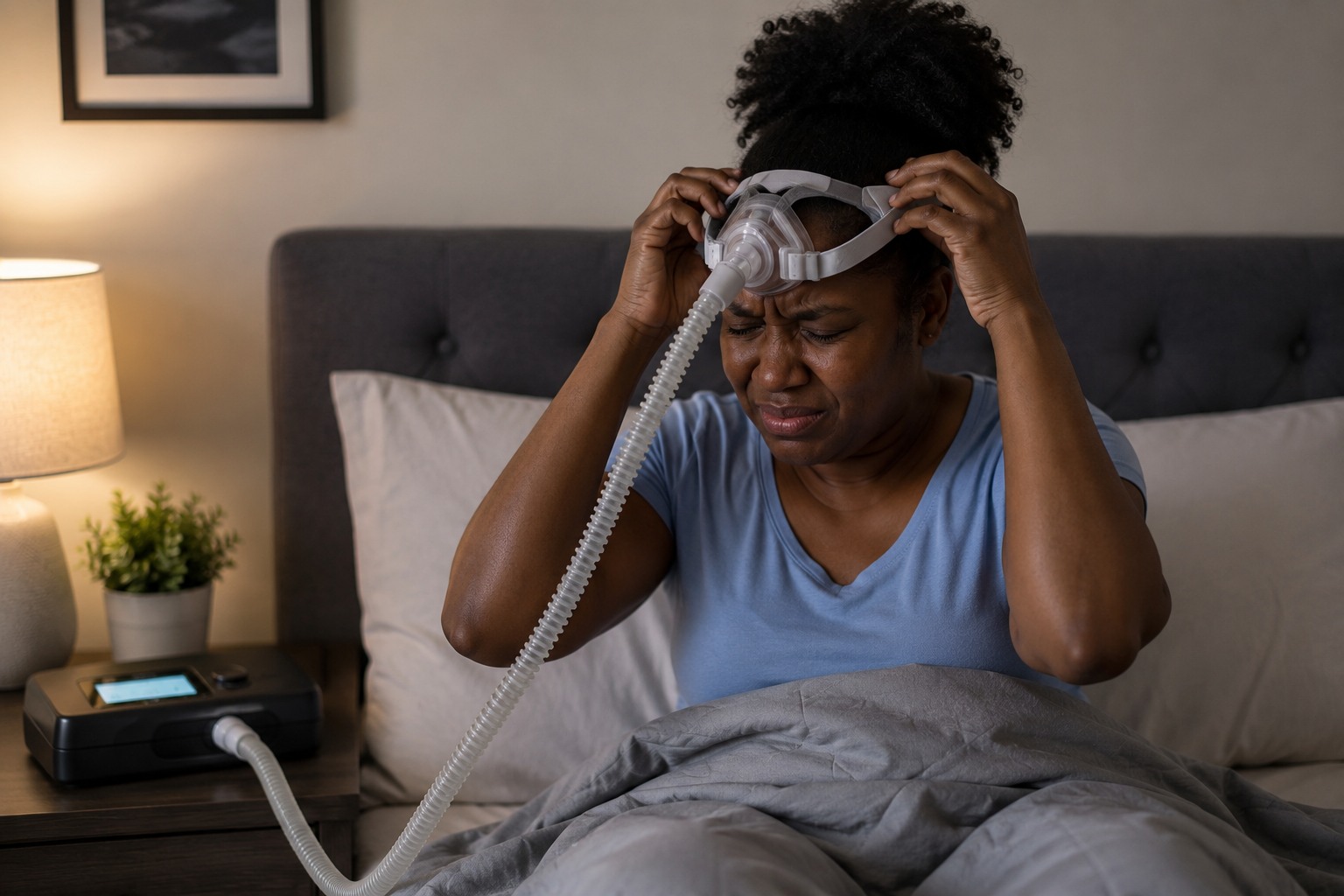
You were diagnosed with sleep apnea. Your doctor prescribed CPAP. You tried it and could not do it. Maybe the mask felt suffocating. Maybe you woke up in the middle of the night, having already ripped it off. Maybe you have had it sitting in its case for six months because every time you try, the anxiety kicks in before you even fall asleep.
You are not weak. You are not failing your treatment. CPAP intolerance is one of the most common problems I see in sleep medicine, and it has real, fixable causes. What I do not want is for you to quietly stop treating your sleep apnea and say nothing to your doctor because untreated sleep apnea carries serious health consequences, including increased risk of high blood pressure, heart disease, stroke, and metabolic problems.
The good news: CPAP is not your only option, and even if CPAP is the right treatment for you, intolerance is almost always solvable with the right approach.
Why CPAP Intolerance Is So Common
CPAP adherence research is sobering. Studies consistently show that 30 to 50% of patients prescribed CPAP either stop using it or never use it consistently. Yet most patients are handed their machine, given a brief tutorial, and sent home with little support for what happens when it is hard.
CPAP intolerance takes several different forms, and correctly identifying yours matters for finding the right solution.
The Most Common Reasons CPAP Feels Impossible
1. Claustrophobia and Mask Anxiety
This is the most misunderstood form of CPAP intolerance. The mask goes on, the air starts flowing, and something in your brain fires, trapped, cannot breathe, get it off. Even if you know intellectually that the mask is not dangerous, the anxiety response is real and physiological.
This is not a personality problem. It is a conditioned response, and it can be systematically untrained.
2. Pressure That Feels Wrong
CPAP delivers a continuous positive airway pressure to keep your airway open. If that pressure is too high, it can feel like you are breathing against a wall, particularly when exhaling. If it is too low, it may not control your apnea events, leaving you feeling unrefreshed. Both situations lead to abandonment.
Many patients are set up with a fixed pressure that was right when they were first diagnosed, but has not been adjusted in years, or was never optimized to begin with. This is a solvable equipment problem.
3. Mask Fit and Type
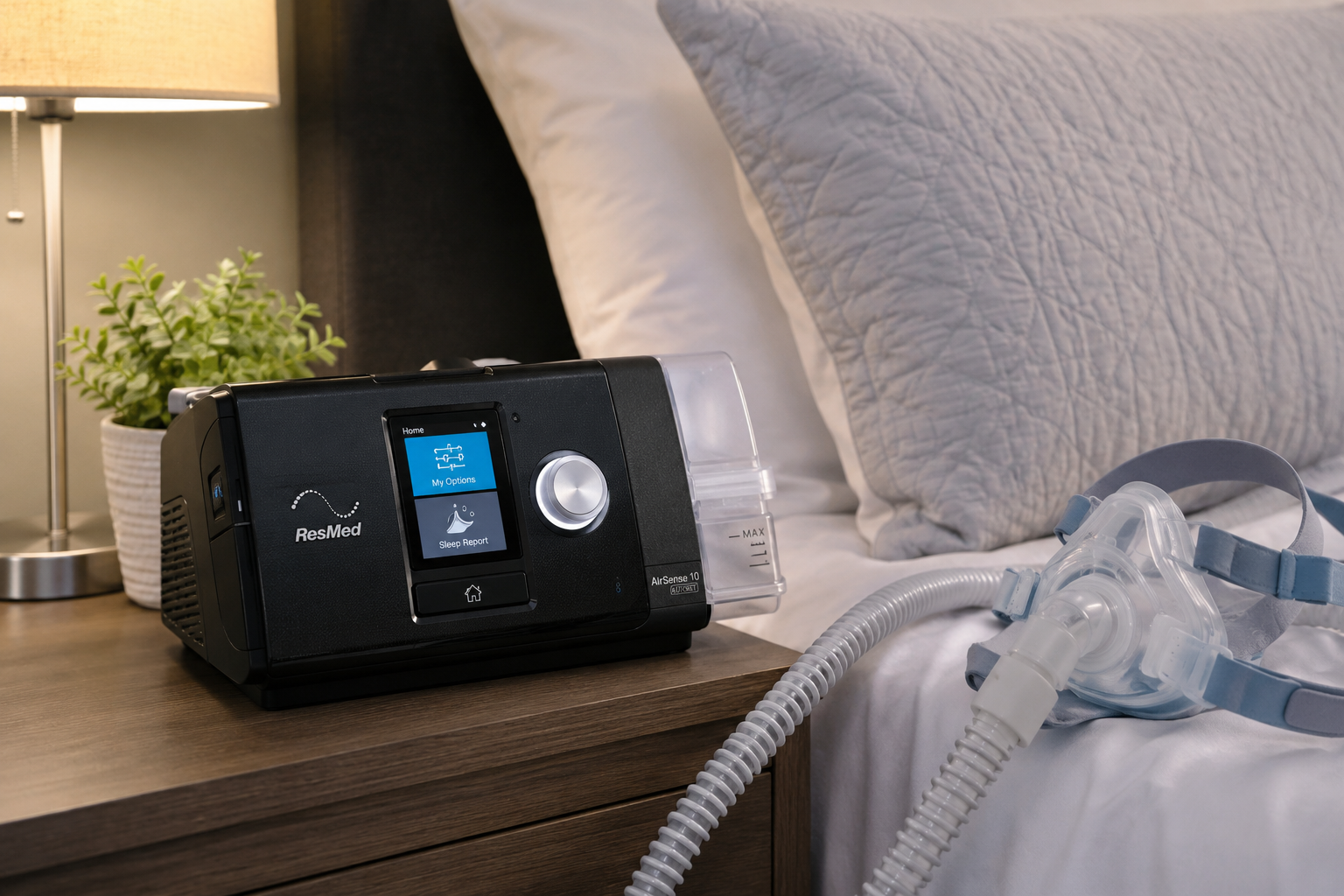
There are three primary mask types: full face masks covering nose and mouth, nasal masks covering just the nose, and nasal pillows which sit at the nostril opening. What works for one person is intolerable for another. If you were given a full face mask and feel trapped, a nasal pillow interface might change everything. Mask fit also deteriorates over time. An old, stretched-out mask leaks air, makes noise, and loses the seal that makes CPAP work.
4. Mouth Breathing and Air Leaks
If you breathe through your mouth while sleeping, a nasal-only mask will leave you with a dry mouth and inadequate therapy. Solutions include switching to a full face mask, using a chin strap, or adding a heated humidifier, which most modern CPAP machines include.
5. Aerophagia (Swallowing Air)
Some patients on CPAP develop significant bloating, gas, or belching because they are swallowing air instead of breathing it. This is usually a pressure problem or a positional issue and it is highly treatable once identified.
6. Noise and Partner Disturbance
Modern CPAP machines are significantly quieter than older models but noise remains a complaint, particularly if you are using an outdated unit or if your mask is leaking. A properly fitted mask on a current-generation machine should produce minimal noise.
Before assuming it is anxiety, check the Equipment First
This is critical and often skipped. Many patients diagnosed with CPAP anxiety are actually struggling with equipment problems such as wrong pressure, wrong mask type, outdated machine, or settings that were never personalized.
Before working on psychological adjustment, make sure:
Your pressure settings have been reviewed recently, ideally with data from your machine's built-in compliance reporting. Your ramp setting is activated, which allows pressure to start low and build gradually as you fall asleep up to 45 minutes, which many patients find far more tolerable. Your mask has been replaced within the last 6 months. Your humidifier is working and set appropriately for your climate. You have tried at least two different mask types.
If you have not had a follow-up with a sleep physician since your initial setup, that is the first call to make.
The Anxiety Cycle and How to Break It
If equipment is optimized and anxiety remains, what is happening is a learned response, and it can be unlearned.
Here is the cycle that develops. You put on the mask. Anxiety rises. The discomfort becomes unbearable. You remove the mask. Relief floods in. Your brain registers this sequence and files it: mask equals anxiety, removal equals relief. Each repetition deepens that association.
The evidence-based approach to breaking this cycle is called CPAP desensitization, a structured exposure protocol developed specifically for this problem. It works on the same principles as exposure therapy for phobias.
CPAP Desensitization: Step by Step
Phase 1: Mask familiarity (daytime only, not in bed). Sit somewhere comfortable, a couch or a chair. Hold the mask against your face without strapping it to your face, with the air flowing. Stay there until the discomfort eases even slightly. This might take 1 minute or 10. Do not force it. Repeat daily.
Phase 2: Wear it fully (daytime). Strap the mask on with airflow running. Sit calmly, watch something, read something. The goal is not sleep. It is a neutral coexistence with the mask. Build from 5 minutes to 20 minutes over several days.
Phase 3: Naps. Attempt a short nap with the mask on. Again, falling asleep is not required. Resting calmly counts as progress. If you fall asleep for 20 minutes, that is a meaningful win.
Phase 4: Partial nights. Use your CPAP for the first portion of the night. If you wake and remove it that is acceptable. You wore it for some time. Gradually extend the window.
Additional strategies that help: Put the mask on when you are already drowsy, not before you even lie down. Practice slow diaphragmatic breathing with the mask on. This activates the parasympathetic nervous system and counteracts the anxiety response. If anxiety is severe working with a psychologist trained in CBT or exposure therapy can accelerate progress significantly.
Progress is rarely linear. A bad night does not erase what you have built. Go back a phase if needed and continue.
When CPAP Is Genuinely Not the Right Treatment
CPAP is highly effective for moderate to severe obstructive sleep apnea, but it is not the only evidence-based treatment. Depending on your apnea severity, anatomy, and medical history, alternatives may be appropriate.
Oral appliance therapy is a custom device fitted by a dentist trained in dental sleep medicine that repositions the lower jaw to keep the airway open during sleep. Evidence supports its use for mild to moderate sleep apnea and for some patients with severe apnea who genuinely cannot tolerate CPAP. It does not work for everyone, and it requires follow-up sleep testing to confirm effectiveness.
Positional therapy applies to some patients who have sleep apnea that occurs predominantly when sleeping on their back. For these patients, devices or strategies that prevent back sleeping can significantly reduce apnea severity.
Inspire or hypoglossal nerve stimulation is an implanted device that stimulates the nerve controlling the tongue during sleep keeping the airway open. It is FDA approved for patients who cannot tolerate CPAP and meet specific anatomical and severity criteria.
Weight management is relevant for patients with obesity related sleep apnea, where significant weight loss can reduce apnea severity, sometimes dramatically. GLP-1 medications have shown meaningful benefit in this area.
What does not count as treatment: Positional pillows, mouth tape, and most supplements marketed for snoring or sleep apnea are not evidence-based treatments for diagnosed obstructive sleep apnea.
The Risk of Leaving Sleep Apnea Untreated
Untreated moderate to severe sleep apnea is associated with significantly elevated risk of hypertension, increased risk of atrial fibrillation and other cardiac arrhythmias, higher risk of stroke, worsening insulin resistance and type 2 diabetes, cognitive decline and memory problems over time, and worsening depression and anxiety.
Feeling functional is not the same as being adequately treated. If CPAP is not working for you, please tell your sleep doctor, not because you should be pressured back onto a machine, but because there are real alternatives that deserve to be explored.
How We Help at The Restful Sleep Place
At The Restful Sleep Place, we do not hand you a machine and send you home. We provide comprehensive sleep apnea care that includes evaluating whether CPAP is the right treatment for you, reviewing your existing CPAP data if you already have a machine, discussing alternatives, and supporting you through the adjustment process. We also coordinate with dental sleep medicine providers for oral appliance therapy when appropriate.
We see patients in person in Horsham, PA, and via telehealth across Pennsylvania, New Jersey, and California.
👉 Book a free 15-minute meet and greet
Struggling with CPAP is not the end of the road. It is often just the beginning of finding what actually works for you. 💙
Dr. Funke Afolabi-Brown is a triple board-certified sleep medicine physician, bestselling author of Beyond Tired, and founder of The Restful Sleep Place in Horsham, PA. She specializes in sleep apnea, insomnia, and sleep disorders in women, children, and families.
