Why Can't I Sleep During Perimenopause? A Sleep Doctor Explains What's Really Happening
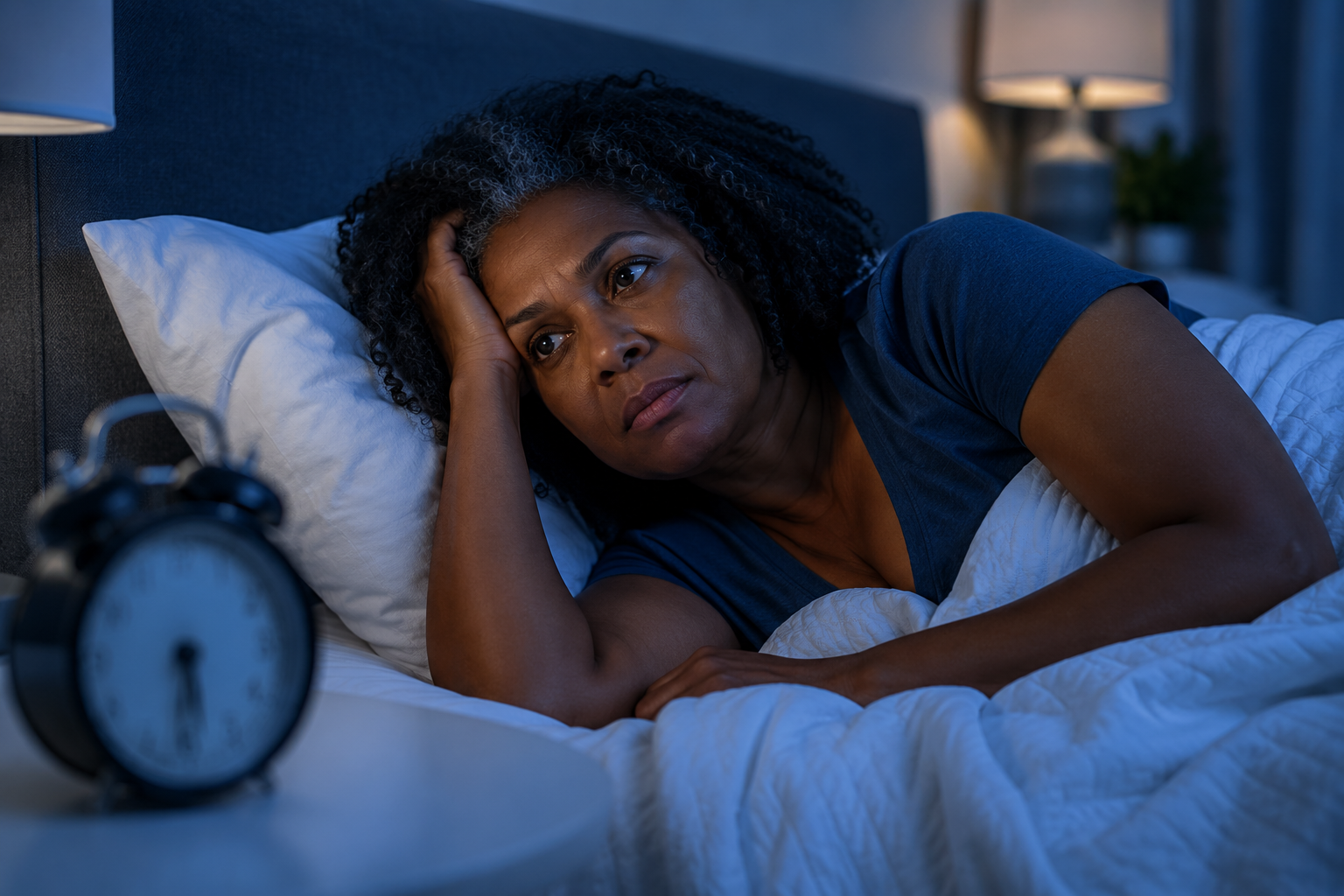
It's 3am. You're wide awake again. You fell asleep fine but now you're staring at the ceiling, heart racing, drenched in sweat, mind spinning. Or maybe you've been lying there since 11pm, exhausted but completely unable to drift off. You used to be a good sleeper. What happened?
If you're in your 40s or early 50s, the answer is likely perimenopause and your sleep struggles are not in your head, not a character flaw, and not something you simply have to push through.
As a board-certified sleep medicine physician who specializes in women's sleep, I see this pattern every single week. Women who were perfectly good sleepers suddenly can't stay asleep, can't fall asleep, or wake exhausted no matter how many hours they spent in bed. Understanding exactly why this happens is the first step toward fixing it.
What Is Perimenopause, and When Does It Start?
Perimenopause is the hormonal transition leading up to menopause the point when your period has stopped for 12 consecutive months. Perimenopause can begin as early as your late 30s, though most women notice it in their mid-to-late 40s. It can last anywhere from 2 to 10 years.
During this time, estrogen and progesterone don't drop smoothly. They fluctuate sometimes wildly before eventually declining. Those fluctuations are what drive the symptoms most women associate with "the change," including the sleep disruptions.
Up to 47% of perimenopausal women report significant sleep problems, a number that rises to 60% after menopause. This is not a fringe experience. It is one of the most common sleep complaints I treat.
Why Perimenopause Disrupts Sleep: The Real Mechanisms
This is where I want to go deeper than most articles do because understanding the "why" helps you choose the right solutions.
1. Declining Progesterone - The Sleep Hormone You've Never Heard Of
Most people know about estrogen. Fewer realize that progesterone is powerfully sleep-promoting. It works on the same receptors in your brain as anti-anxiety medications. It calms the nervous system, reduces nighttime awakenings, and supports slow-wave (deep) sleep.
Progesterone begins declining earlier in perimenopause than estrogen does. This is why many women notice sleep changes particularly waking in the middle of the night, years before they have any hot flashes. If you're waking at 2am or 3am and lying awake for an hour or more, dropping progesterone is often a key driver.
2. Estrogen Fluctuations - The Temperature and REM Disruptor
Estrogen helps regulate your body's thermostat. When levels fluctuate unpredictably, your brain's temperature regulation misfires triggering the hot flashes and night sweats that jolt you awake. Estrogen also supports REM sleep, the stage critical for emotional processing and memory consolidation. As estrogen drops, REM becomes lighter and more fragmented.
3. Night Sweats and Hot Flashes - More Than Just Uncomfortable
These vasomotor symptoms are often the most visible culprit. But the real problem isn't just the discomfort, it's that hot flashes activate your stress response, spiking cortisol and adrenaline at exactly the moment your body should be in its deepest rest. Even brief awakenings from hot flashes can trigger a full cortisol response that keeps you awake for an hour.
4. The Hidden Risk: Sleep Apnea in Perimenopausal Women
This is the most underdiagnosed piece of the puzzle, and I cannot emphasize it enough.
Estrogen and progesterone have protective effects on the upper airway muscles. As these hormones decline, the airway becomes more collapsible increasing the risk of obstructive sleep apnea. Studies show that after menopause, women's rates of sleep apnea approach those of men.
Sleep apnea in women often looks different than in men. Women are less likely to snore loudly. Instead they present with insomnia, frequent nighttime awakenings, morning headaches, fatigue, brain fog, and mood changes, symptoms that are easily misattributed to "just menopause." Many women spend years being treated for insomnia when they actually have undiagnosed sleep apnea underneath.
If you're in perimenopause and your sleep is significantly disrupted, a proper evaluation not just tips and supplements is warranted.
5. Anxiety, Cortisol, and a Hyperactivated Brain
The hormonal shifts of perimenopause often amplify anxiety, even in women who have never struggled with it before. Higher baseline anxiety raises nighttime cortisol, making it harder to fall asleep and easier to wake. This creates a cycle: poor sleep worsens anxiety, which worsens sleep.
What Actually Works: Evidence-Based Strategies
I want to be direct here: not everything you'll read online about menopause and sleep is equally supported by evidence. Let me separate the well-established from the promising-but-unproven.
Cognitive Behavioral Therapy for Insomnia (CBT-I) - The Gold Standard
CBT-I is the first-line treatment for insomnia recommended by the American Academy of Sleep Medicine, above sleeping pills. It addresses the thought patterns and behaviors that perpetuate sleeplessness, and it works even when the underlying trigger is hormonal. If you are lying awake for more than 30 minutes on most nights, CBT-I should be part of your treatment plan. This is something we offer at The Restful Sleep Place as part of our comprehensive sleep programs.
Sleep Hygiene - The Foundation, Not the Cure
Sleep hygiene matters but it is rarely sufficient on its own for perimenopausal sleep disruption. Think of it as the floor you build everything else on.
The most important practices:
Keep your wake time consistent every day, including weekends. This is the single most powerful circadian anchor.
Drop your bedroom temperature to 65–68°F. Cooler sleep environments meaningfully reduce night sweat severity.
Avoid alcohol. It may feel relaxing but it fragments sleep, worsens night sweats, and relaxes the airway, worsening any underlying sleep apnea.
Limit caffeine after noon. Caffeine's half-life is 5–7 hours; a 3pm coffee is still active at 10pm.
Reduce screen exposure in the hour before bed, blue light suppresses melatonin.
Exercise
Regular moderate exercise particularly aerobic activity like brisk walking, cycling, or swimming, improves sleep quality, reduces hot flash frequency, and supports mood. Aim for at least 150 minutes per week. Avoid vigorous exercise within 2–3 hours of bedtime as it raises core body temperature.
Hormone Therapy - A Legitimate Option Worth Discussing
For women with significant vasomotor symptoms driving their sleep disruption, hormone therapy (HT) can be highly effective. For appropriate candidates, it reduces hot flashes, night sweats, and supports sleep architecture. The decision about hormone therapy involves individual risk factors and is one to make with your physician but don't let outdated fears based on older research stop you from having that conversation. The evidence has evolved significantly since 2002.
I work closely with OB-GYNs and women's health providers to ensure my patients' sleep care is coordinated with their broader hormonal health.
What About Melatonin and Sleep Supplements?
Melatonin can be helpful for circadian rhythm issues specifically trouble falling asleep due to a shifted sleep schedule. It is less effective for the middle-of-the-night awakenings that are most characteristic of perimenopausal sleep disruption. Over-the-counter doses are frequently far higher than needed; 0.5mg–1mg is often more appropriate than the 5mg–10mg doses commonly sold.
Supplements like magnesium glycinate and L-theanine are used by many patients and are generally safe, but evidence for meaningful sleep benefit remains limited. I'm not against them, I simply want you to have realistic expectations.
Getting Evaluated - Why This Step Matters More Than Any Tips
If your sleep has significantly changed in perimenopause, the most important thing you can do is get a proper evaluation. Here is why:
Not all sleep disruption in perimenopause has the same cause. Insomnia, sleep apnea, restless legs syndrome, and circadian rhythm changes can all occur and they have different treatments. Treating insomnia in a woman who actually has sleep apnea will not work, and may make things worse. A sleep medicine evaluation identifies the specific mechanisms driving your sleep disruption and builds a treatment plan around them.
When to See a Sleep Specialist
Consider a formal sleep evaluation if:
You regularly take more than 30 minutes to fall asleep or return to sleep after waking
You wake feeling unrefreshed most mornings despite adequate time in bed
A bed partner reports snoring, gasping, or pauses in your breathing
You have significant daytime fatigue, brain fog, or mood changes
You've been managing this on your own for more than 3 months without improvement
You don't have to accept exhaustion as the price of midlife. Your sleep changed — but it can change back.
How We Help at The Restful Sleep Place
At The Restful Sleep Place, I specialize in exactly this intersection: women in midlife whose sleep has changed and who deserve a thorough evaluation rather than generic advice. We offer comprehensive sleep consultations, home sleep testing when indicated, and a 6-month Sleep Reset program that integrates CBT-I with ongoing medical oversight and personalized coaching.
We see patients in person in Horsham, PA and via telehealth across Pennsylvania, New Jersey, and California.
Book a free 15-minute meet-and-greet →
Your sleep is worth taking seriously. Let's figure out what's actually going on.
Dr. Funke Afolabi-Brown is a triple board-certified sleep medicine physician, bestselling author of Beyond Tired, and founder of The Restful Sleep Place in Horsham, PA. She specializes in sleep disorders in women, children, and families.
