

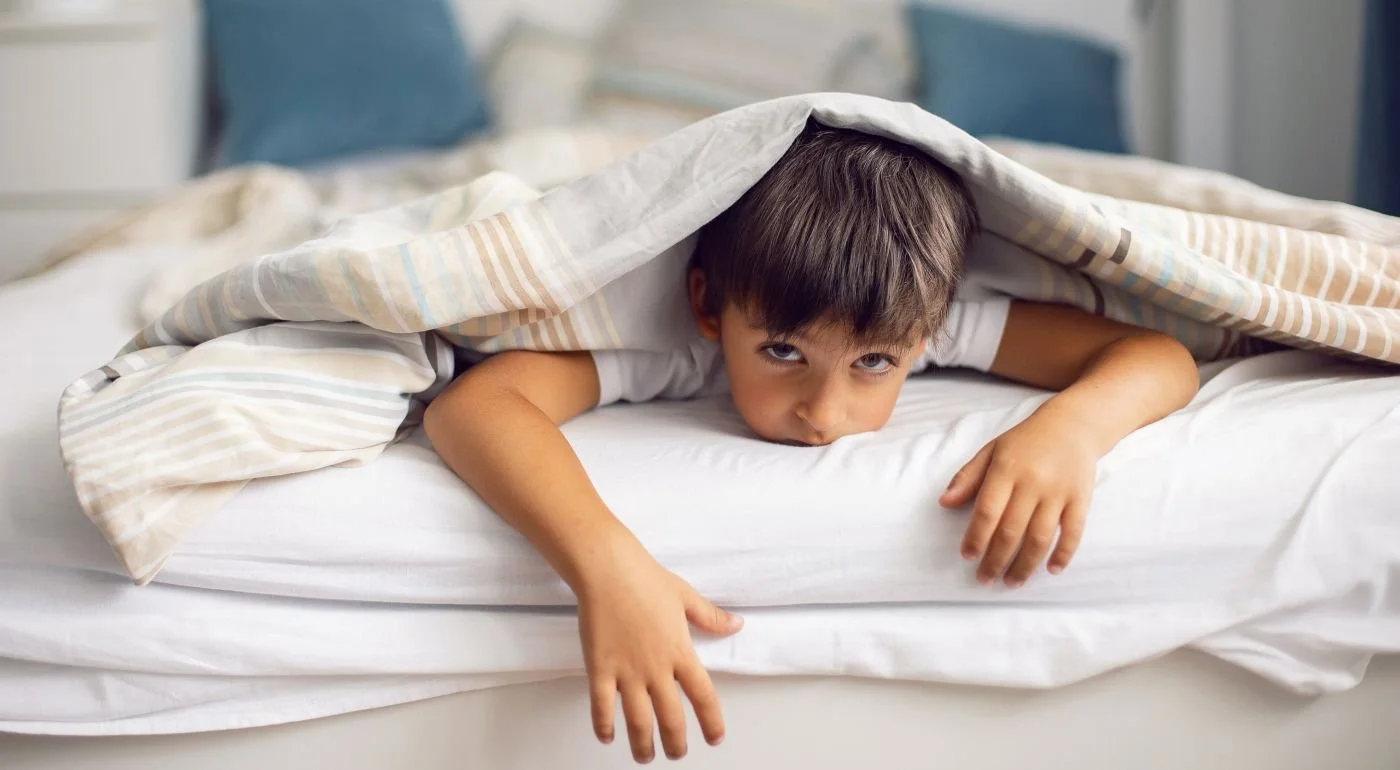
If your child was dry at night for at least six months and suddenly starts wetting the bed again, doctors call it secondary nocturnal enuresis. The change doesn't automatically mean something serious, but it's worth checking. Constipation, urinary problems, diabetes, stress, and sleep-disordered breathing can all be part of the picture.
What Is Secondary Nocturnal Enuresis?
The National Institute of Diabetes and Digestive and Kidney Diseases uses six months of dryness as the dividing line. Primary enuresis describes a child who has never regularly stayed dry overnight. Secondary enuresis starts after that dry period.
Your child isn't choosing to wet the bed, and punishment won't fix it. When accidents return after months of dry nights, the timing gives their clinician a useful clue about what to check.
What Should You Watch for When Bedwetting Returns?
An American Family Physician review notes that secondary enuresis is more likely than primary enuresis to have an underlying cause and may be the first sign of a new medical issue. Tell your child's clinician about:
pain or burning with urination, frequent urination, or unusual urine
daytime urgency or accidents, constipation, or unusual thirst
a major recent stressor at home or school
loud snoring, mouth breathing, gasping during sleep, or daytime sleepiness
Those details help narrow down whether the return of bedwetting points toward a urinary, medical, or sleep-related problem.
Can Bedwetting and Sleep Apnea Be Connected?
Yes. Snoring, mouth breathing, gasping, enlarged tonsils, and daytime sleepiness can point toward sleep apnea in a child who wets the bed. Bedwetting alone doesn't diagnose a sleep disorder.
At The Restful Sleep Place in Horsham, PA, Dr. Funke Afolabi-Brown evaluates children with primary and secondary bedwetting. Her evaluation includes medical history, sleep habits, lifestyle factors, and signs of conditions such as sleep apnea. If the pattern points outside sleep medicine, your child's pediatrician or another specialist may need to be involved too.
Treatment depends on what's driving the bedwetting. Care may include routine or fluid-timing changes, a bedwetting alarm, medication when appropriate, or treatment of an underlying condition. When obstructive sleep apnea is present, the review also recommends pediatric ENT evaluation.
FAQs About Bedwetting After Being Dry
Can stress make a child start wetting the bed again?
Yes. Stress can contribute to secondary enuresis, but physical and sleep-related causes still deserve consideration.
When should we see a pediatric sleep specialist?
If bedwetting returns with snoring, gasping, mouth breathing, restless sleep, or daytime sleepiness, a sleep evaluation can help determine whether sleep is part of the problem. Painful urination, unusual urine, or excessive thirst should also be discussed promptly with a health care professional.
Talk With Restful Sleep MD About Pediatric Bedwetting
If bedwetting has returned and snoring, gasping, restless sleep, or daytime sleepiness came with it, Dr. Brown can help you figure out whether sleep is part of the problem. She's triple-board-certified in pediatrics, pediatric pulmonology, and sleep medicine and previously served on the faculty at Children's Hospital of Philadelphia. Families can see her in Horsham, PA, or by telehealth in Pennsylvania, New Jersey, and California. Start with a free 15-minute call to see whether The Restful Sleep Place is a good fit for your child.
