Sleep Anxiety? Here’s What’s Actually Happening and What to Do About It
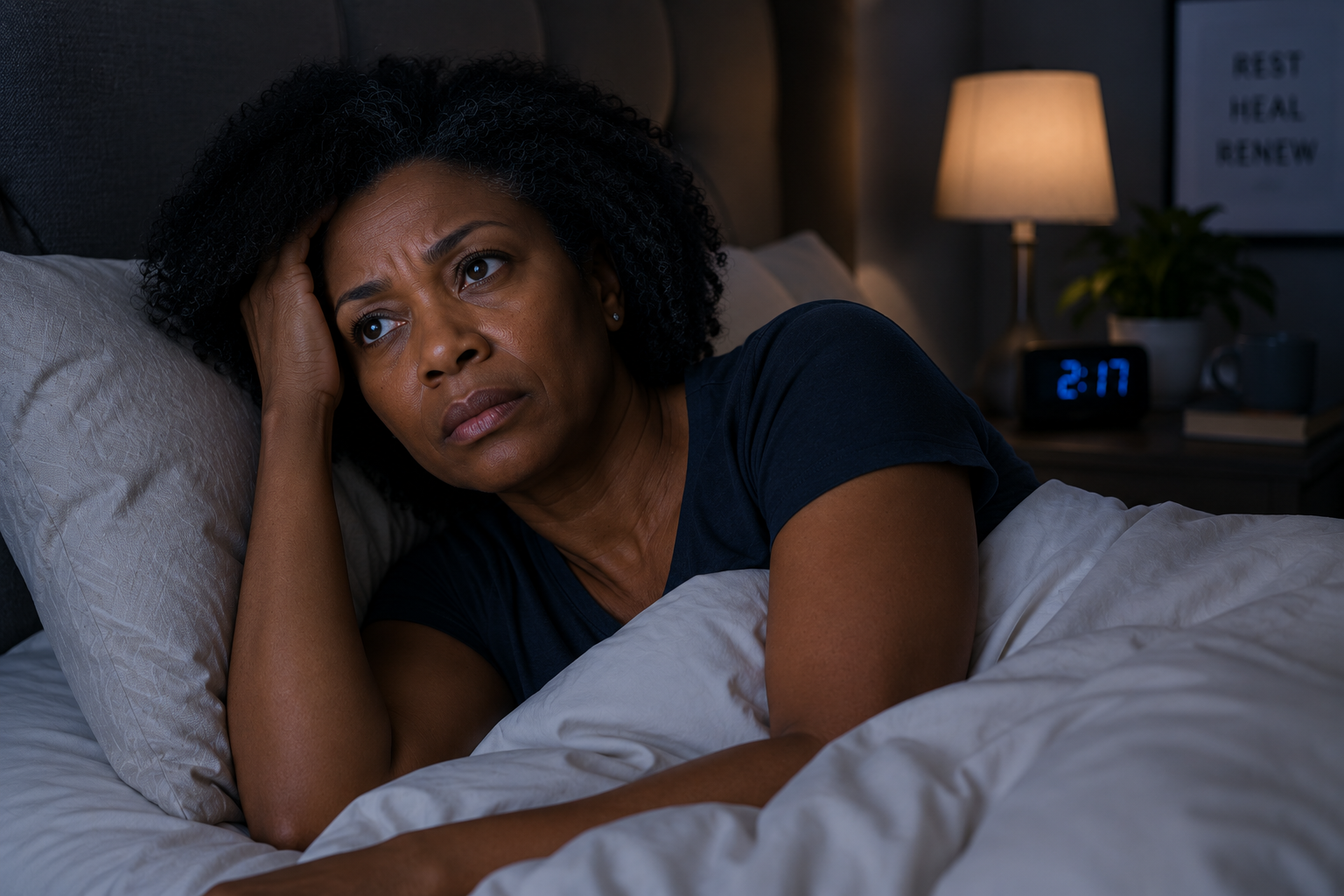
You’ve been lying in bed for hours. Your heart is racing. Your limbs feel electric, almost buzzy. You’re simultaneously freezing and overheated. And your mind is running at full speed, cataloguing every hour of sleep you’re losing.
This isn’t just anxiety. This is hyperarousal, and it is one of the most distressing, misunderstood, and under-addressed dimensions of insomnia.
If you’ve been through this, I want you to know: you are not broken. Your nervous system is doing exactly what it was designed to do. The problem is that it has gotten the threat memo mixed up.
What Is Hyperarousal, Exactly?
Hyperarousal is a state of heightened alertness that sits at the core of chronic insomnia. It is not a character flaw, and it is not something you are choosing. It is your brain’s threat-detection system the same one that would flood your body with adrenaline if you stepped into traffic, firing in response to the perceived danger of being awake at night.
Physically, it can look like:
• A racing or pounding heart
• A vibrating or buzzing sensation in the limbs
• Rapid or shallow breathing
• Hot flashes or chills
• A knotted stomach
• Full-blown panic attacks
This is something I see regularly in my practice, and it is one of the main reasons that a generalized approach to insomnia rarely works for everyone.
Why Fighting It Makes It Worse
Here is the cruel irony of hyperarousal: the harder you try to make it stop, the more power you give it.
When your heart starts racing at 2 am and your mind immediately responds with “I cannot feel this right now, I need to calm down so I can sleep,” you have just confirmed to your nervous system that there is, in fact, something to be afraid of. You have handed the threat signal a megaphone.
The suppression instinct is understandable. It is human. But it is working against you.
A Different Approach: Acceptance Over Suppression
The evidence-based framework I use with my patients draws heavily from Acceptance and Commitment Therapy (ACT), a well-researched psychological approach that has strong support in insomnia treatment. I will write a dedicated post explaining ACT in full. But the core principle, applied to hyperarousal, is this:
You do not have to make the feeling stop. You have to stop being afraid of the feeling.
This is not the same thing. And the distinction matters enormously.
Hyperarousal is deeply uncomfortable. I am not going to minimize that. But discomfort and danger are not the same thing. Your heart rate elevates when you exercise. Your limbs feel shaky when you are cold. Your breathing quickens when you laugh hard. None of those sensations signal a threat, and neither does the identical physiology happening at 3 am.
When you can genuinely begin to relate to these nighttime sensations as an annoyance rather than a threat, a pebble in your shoe rather than an emergency, you interrupt the fear-arousal cycle. And paradoxically, when the fear decreases, the arousal tends to follow.
What This Looks Like in Practice
When hyperarousal peaks, the instinct is to lie there and battle it. Instead, try this reframe:
Ask yourself: “What is within my control right now that would feel even slightly more comfortable?”
Not “How do I fix this?” Not “How do I force sleep?” Just: what is the smallest, most accessible step toward slightly less discomfort?
It might be an audiobook. It might be gentle movement. It might be sitting quietly in a dark room without the pressure of trying to sleep. The goal is not joy. The goal is not sleep. The goal is removing the layer of struggle on top of the discomfort.
And when the physical sensations arrive anyway, because they will try bringing your attention to each one individually. Name it. Locate it. Notice that the sensation itself, separated from your story about it, is simply a sensation. It is not harming you. It is not permanent. It does not require a response.
When to Get Professional Help
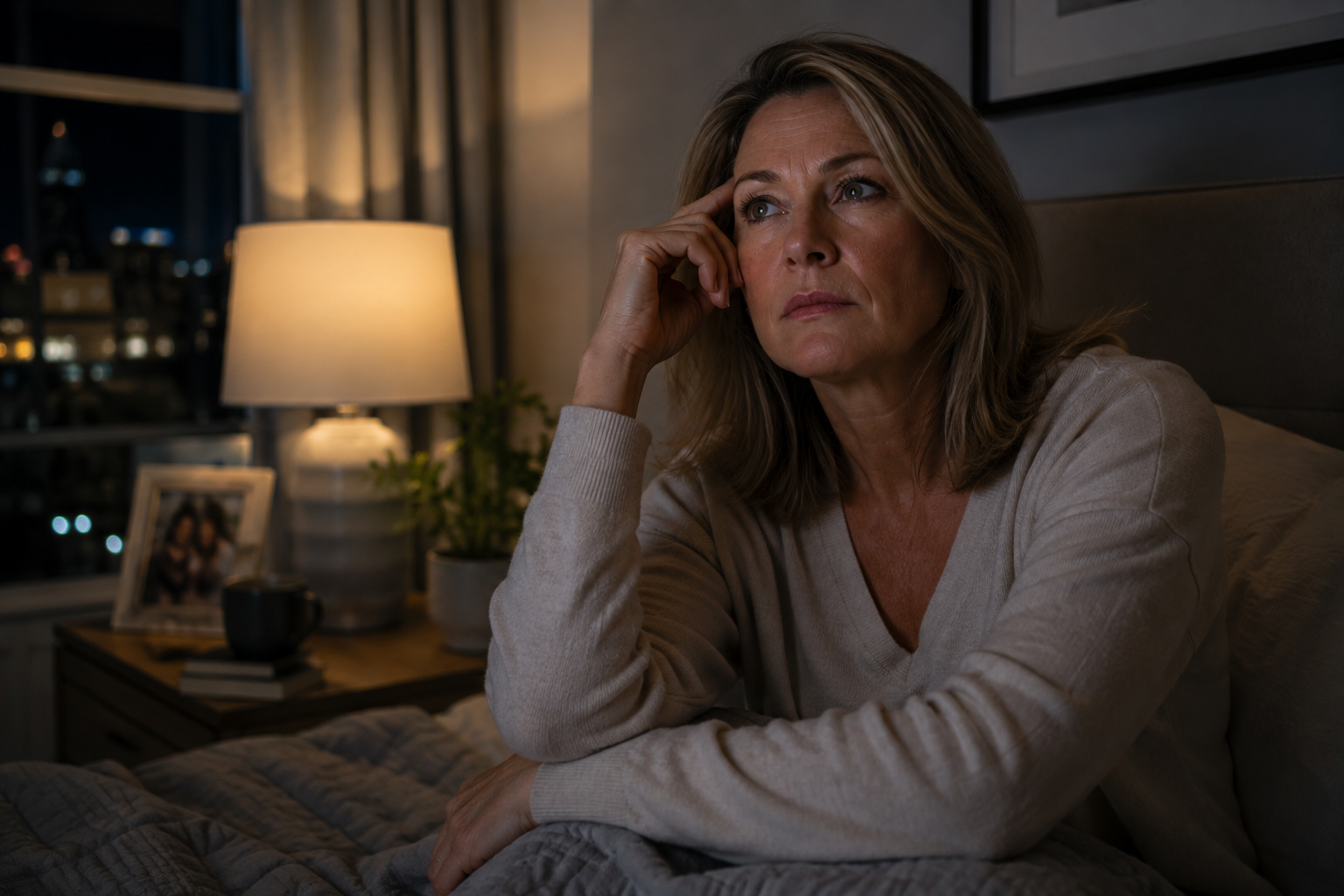
I want to be direct here: the approach above is a meaningful starting point, and for some people it is genuinely sufficient. But hyperarousal that has become entrenched, particularly when it is layered with hormonal changes, a history of anxiety, or months to years of poor sleep, often requires more than a mindset shift.
Cognitive Behavioral Therapy for Insomnia (CBT-I) remains the gold standard first-line treatment for chronic insomnia. ACT-based approaches are a strong complement. And when the hormonal picture is complicating things, a physician who understands both the sleep science and the endocrinology is not optional; it is essential.
If you have been white-knuckling your nights for months and feel like you have tried everything, please hear this: you have likely not had the right support. That is not a failure of willpower. It is a gap in access.
What We Do Differently at The Restful Sleep Place
At The Restful Sleep Place, I do not hand you a generic sleep hygiene checklist and send you on your way. Every patient, whether a child or an adult, receives a comprehensive evaluation that looks at the full picture: sleep architecture, arousal patterns, hormonal context, mental health, and lifestyle.
For women in midlife especially, I look at how perimenopause and menopause are intersecting with insomnia and anxiety, because they almost always are, and most practices are not trained to hold both.
If you are not ready for a one-on-one consultation yet, my insomnia course is a structured, evidence-based program built on the same CBT-I and ACT principles I use in clinical practice. It is designed for people who are mid-struggle and want a clear path forward, not generic tips, but a real framework.
You can start with our free Sleep Quiz to get a clearer picture of what your sleep pattern is telling you. The link is in my bio.
Sleep will come. Even hyperarousal cannot stop it indefinitely sleep drive is a biological imperative. What you can do right now is stop making wakefulness the enemy. The only way through the panic is through it, not around it.
You are not broken. You are a nervous system that learned the wrong lesson. And nervous systems can learn again.
